Venue Variables That Shape Outcomes in Cross-Border Football and Equine Events
Written by Avery Flores · Jun 18, 2026
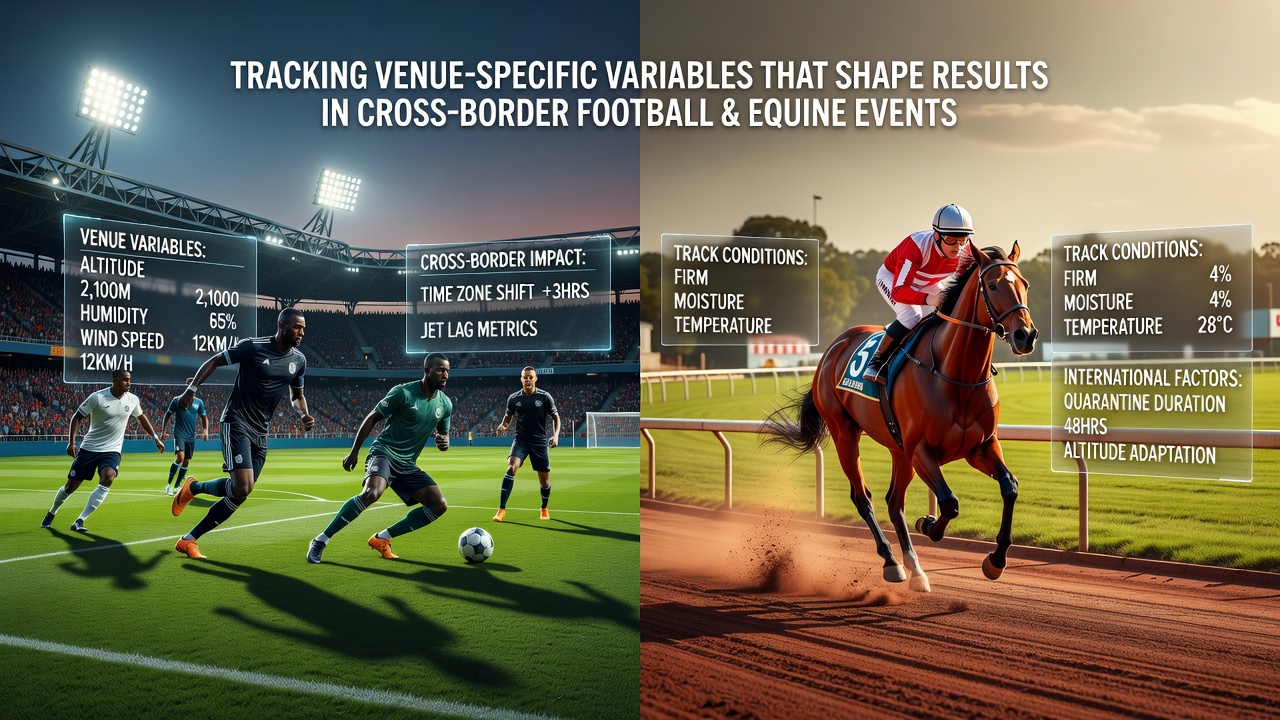
Venue Variables That Shape Outcomes in Cross-Border Football and Equine Events
Cross-border competitions in football and equine events bring together teams and horses from multiple regions, and venue-specific variables often play a decisive role in final results. These factors range from physical characteristics of the field or track to environmental conditions that vary sharply between countries and even within the same nation. Data collected from international matches and races shows consistent patterns where altitude, surface composition, and local climate alter performance metrics in measurable ways.
Physical Characteristics of Playing Surfaces
Football pitches in different countries present distinct challenges due to grass type, soil composition, and maintenance standards. European venues typically feature cool-season grasses that remain firm in cooler months, whereas South American fields often use warm-season varieties that become slick after rainfall. Researchers at sports science programs have documented how these differences affect ball speed and player traction during matches involving clubs from both continents. Equine events follow similar patterns, with dirt tracks in North America providing different cushioning compared to turf courses common in Europe and Australia.
Altitude and Its Effects on Endurance
High-altitude venues create oxygen availability challenges that impact both human athletes and horses. Matches played in locations above 2,000 meters see reduced sprint distances in the later stages, according to performance tracking studies from international tournaments. Horse races at similar elevations demonstrate slower overall times and altered pacing strategies as animals adjust to thinner air. In June 2026 several cross-border fixtures are scheduled at mid-elevation sites, giving analysts fresh data sets to compare against sea-level events.
Climate and Weather Interactions
Temperature and humidity levels at each venue directly influence recovery rates and injury risks. Football teams traveling from temperate zones to tropical locations frequently encounter higher core body temperatures during matches, which alters substitution patterns. Equine competitions face parallel issues when humidity rises above 70 percent, prompting trainers to adjust pre-race hydration protocols. Weather data compiled by regional racing authorities and football federations allows for precise modeling of how these conditions shift expected outcomes.
Travel and Time Zone Adjustments
Long-haul flights across multiple time zones disrupt circadian rhythms for both players and equine athletes. Studies from university research groups in Australia and Canada indicate that eastward travel tends to produce greater performance decrements than westward journeys of equal distance. Venue operators in host countries now publish detailed acclimatization schedules that teams and trainers incorporate into preparation routines ahead of cross-border events.

Data Collection Methods Across Regions
Modern tracking systems combine GPS units, video analysis, and environmental sensors to record venue-specific data at high resolution. European racing bodies and North American football leagues share standardized formats that facilitate comparisons between distant locations. Observers note that combining these datasets reveals correlations between surface hardness measurements and goal-scoring rates or finishing times that single-region studies often miss.
Regulatory Differences by Jurisdiction
Each country maintains its own rules governing pitch dimensions, track widths, and allowable surface treatments. The Canadian Pari-Mutuel Agency and the Australian Racing Board publish annual reports detailing how these regulations influence results when international competitors arrive. Such variations require visiting teams and stables to adapt equipment and training methods quickly upon arrival at unfamiliar venues.
Case Examples From Recent Seasons
One study of South American football clubs competing in European venues revealed measurable drops in high-intensity running distance during the first half when matches occurred on narrower pitches than those used domestically. In equine racing, horses shipping from dirt-based circuits to European turf meetings showed adjusted stride patterns that affected final placings in the opening races of their campaigns. These examples illustrate why analysts maintain detailed venue profiles updated after every international fixture.
Conclusion
Tracking venue-specific variables requires systematic collection of surface, climate, altitude, and regulatory data from each location hosting cross-border football or equine events. Organizations that integrate these factors into performance models produce more accurate projections when teams and horses travel between regions. Continued monitoring through June 2026 and beyond will expand the available datasets and refine understanding of how location shapes competitive outcomes.