How Shifting Seasons Alter Accumulator Outcomes in Global Football and Grass Track Racing
Written by Sage Becker · Aug 25, 2026

How Shifting Seasons Alter Accumulator Outcomes in Global Football and Grass Track Racing
Seasonal weather swings create measurable shifts in playing surfaces and athlete performance across football leagues and turf racing circuits, and these changes directly influence the frequency of upsets that drive accumulator payouts higher or lower depending on the bet structure. Data from multiple regions shows that prolonged rainfall or sudden temperature spikes alter ball behavior on grass, horse traction on turf, and overall match or race predictability in ways that compound through multi-leg wagers.
Football League Responses to Weather Variability
European competitions experience frequent autumn and spring rain cycles that soften pitches, while South American leagues contend with summer heatwaves that accelerate fatigue in later match stages, and observers note both patterns produce more low-scoring results than forecast models anticipate. In August 2026 early-season fixtures across several top divisions recorded above-average precipitation in northern Europe combined with unseasonal warmth in southern venues, leading to a documented rise in draw percentages that disrupted accumulator sequences built around favorite wins. Research from university sports science departments indicates that wet conditions reduce sprint distances by measurable margins, favoring compact defensive setups over expansive attacking play and thereby elevating the occurrence of stalemates.
Turf Racing Conditions and Performance Metrics
Grass track events respond even more visibly to moisture levels because turf firmness directly dictates stride length and injury risk for thoroughbreds, and historical records from major racing jurisdictions reveal that heavy going after extended wet spells produces larger margins between winners and placed runners. Australian and North American circuits have logged data showing that rapid drying after storms creates variable ground that rewards horses with proven adaptability, a factor that frequently overturns pre-race rankings compiled under standard assumptions. Those studying these patterns find that such variability increases the hit rate of longer-priced runners in individual races, which in turn multiplies payout values when bettors combine several turf events into single accumulator tickets.
Accumulator Structures Under Seasonal Pressure
Accumulators require all selections to succeed for a return, so any weather-induced deviation in one leg can nullify the entire ticket and this sensitivity becomes pronounced during transitional months when conditions fluctuate week to week. Figures compiled by industry monitoring services illustrate that accumulators spanning both football and turf events see payout volatility rise when forecasters underestimate surface changes, because a single rain-affected draw or an unexpected turf specialist victory can eliminate otherwise strong combinations. People constructing such bets often track venue-specific weather histories to adjust stake allocation, recognizing that certain grounds produce more consistent results across seasons while others amplify surprises.
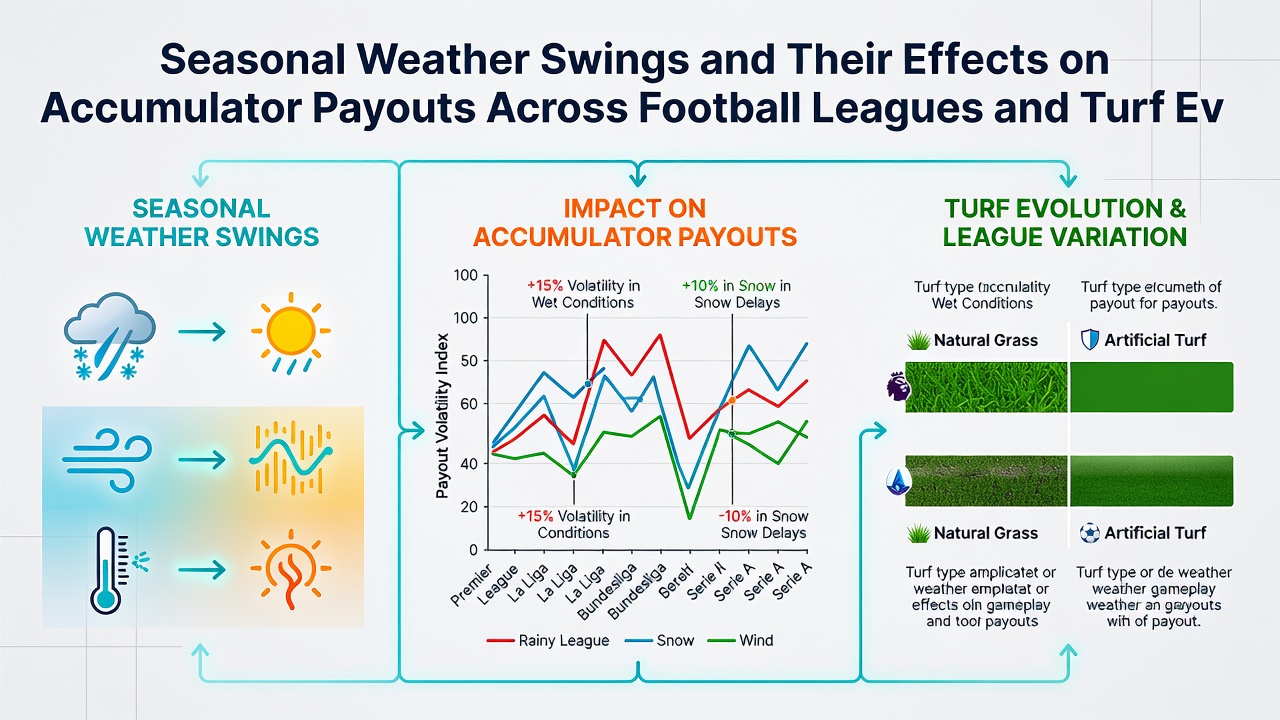
But here's the thing: the interaction between weather and betting markets extends beyond individual events because bookmakers adjust opening odds using long-term climate averages that may not capture short-term swings, creating temporary inefficiencies that accumulator builders attempt to exploit through late adjustments. Studies conducted by North American research institutions have quantified how temperature deviations of just a few degrees correlate with measurable drops in goal tallies during football matches and slower overall race times on turf, data points that feed into refined modeling for future seasons.
Geographic and Temporal Patterns Observed in 2026
August 2026 brought distinct regional contrasts with northern hemisphere leagues facing uncharacteristic humidity spikes that mirrored patterns previously recorded in subtropical zones, while southern circuits dealt with drier than normal tracks that favored speed-oriented runners. Regulatory bodies in Canada and Australia have published aggregated performance statistics demonstrating that these deviations shifted expected outcomes in roughly one in five fixtures, enough to alter accumulator success rates when multiple legs cross different climates. Industry reports from European gaming associations further confirm that payout distributions widen during such periods as bettors incorporate more defensive or specialist selections to hedge against the uncertainty.
Conclusion
Weather remains an uncontrollable variable that reshapes both football and turf outcomes in ways that cascade through accumulator products, and ongoing collection of surface and performance data continues to refine how these effects are quantified across leagues and racing calendars. Observers tracking August 2026 and similar transitional periods note that accurate integration of meteorological forecasts with historical results offers one avenue for understanding payout fluctuations without eliminating the inherent variance introduced by natural conditions.